Categoría: Bookkeeping

  • New & Used Auto Dealership in New York, NY

    dealership accounting

    Reconciliation serves as the backbone of efficient car dealership accounting, providing a range of benefits that contribute to the overall success and profitability of the business. By meticulously comparing and verifying financial records, reconciliation ensures the accuracy and integrity of financial transactions, safeguarding against errors and fraudulent activities. It acts as a critical internal control mechanism, allowing dealerships to maintain a clear and accurate picture of their financial health. Implementing a streamlined reconciliation process is essential for maintaining the financial health and integrity of an auto dealership.

    • One of the complexities in revenue recognition arises from the various components that can be included in a car sale.
    • All information prepared on this site is for informational purposes only, and should not be relied on for legal, tax or accounting advice.
    • Another crucial aspect of inventory management is the use of inventory management software.
    • Most dealerships are required to send their monthly financial statement to the factory no later than the 10th day of the following month.
    • This principle allows dealerships to accurately assess their profitability and make informed decisions about pricing, inventory management, and cost control.

    Department of

    The accounting department might not be the first department you think of when seeking to optimize profit, but this crucial area should be a top priority. Reconciliation enhances financial accuracy, uncovers potential issues, and ensures compliance. Effective accounting is crucial for maintaining accurate financial records, optimizing operations, and making informed business decisions. Accrual accounting records revenue and expenses when they are earned or incurred, regardless of when cash accounting for car dealerships is received or paid. This method provides a more accurate representation of a dealership’s financial position by matching revenues with the expenses incurred to generate them. It allows dealerships to recognize revenue when a sale is made, even if the customer has not yet paid.

    • Integrated software can also shorten the monthly closing lag by feeding subsystems (such as accounts payable) into the general ledger.
    • One of the key components of internal controls is the segregation of duties, which involves dividing responsibilities among different employees to reduce the risk of fraud and errors.
    • Transparent communication about how the valuation was determined can build trust and facilitate smoother negotiations.
    • By conducting regular reconciliations, dealerships can quickly identify and rectify these errors, ensuring that financial records accurately reflect the true financial position of the dealership.
    • Payroll in car dealerships involves managing salaries, commissions, and bonuses for a diverse staff, from sales personnel and parts clerks to service technicians.
    • Whether it’s reconciling transactions in real time, enforcing expense compliance, or scaling with your business, Fyle delivers unmatched efficiency and precision.

    Reconciliation in car dealership accounting helps find errors and fraud

    dealership accounting

    Likewise, reconciliation can also help you catch any instances of fraud—especially fraud happening internally. Some dealerships choose to have a third party or a different employee perform the reconciliations so that the same person isn’t handling all of the dealership’s accounting all the time. When one person has total control over the books, they may be tempted to pocket a few checks or skim some money off the top. Many dealerships have largely converted their paper processes to digital to help lower expenses, increase efficiency, meet compliance regulations and be more eco-friendly.

    dealership accounting

    Financial Reporting

    dealership accounting

    Dealerships should stay updated with accounting standards, such as the Financial Accounting Standards Board (FASB) guidelines. Complying with these standards ensures accurate financial reporting and enhances credibility with stakeholders. Efficient credit and collection policies are essential for maintaining healthy cash flow. ⇒ Accountants for car dealerships using this method will Bookkeeping for Chiropractors typically use cost or market replacement costing methods, whichever is the lowest. However, the costs should be weighed against the expected deferral of income at the lowered tax rates through TCJA legislation. As a result, multi-entity dealerships with high-volume sales typically derive significant LIFO advantages.

    dealership accounting

    • For example, focusing on reconciling bank deposits and withdrawals against your accounting records helps ensure that cash receipts are recorded on time.
    • Each vehicle represents a significant investment and must be accounted for accurately.
    • Audits can be scheduled monthly, quarterly, or annually, depending on the size and complexity of the dealership’s operations.
    • Technological advancements, such as the rise of electric vehicles (EVs) and online car sales platforms, also impact accounting practices.
    • It involves unique complexities such as inventory valuation, financing transactions, service income, and warranty management.
    • ⇒ Financial Statements, forecasts, projections, and cash-flow decisions are based on inventory and accounting information.

    A well-structured chart of accounts (COA) is vital for auto dealerships, serving as the backbone of their financial reporting system. This listing of all accounts used in the general ledger allows dealerships to categorize and track financial transactions. The COA typically includes accounts for assets, liabilities, equity, revenues, and expenses, each tailored to reflect dealership operations. For instance, asset online bookkeeping accounts might include inventory categories such as new vehicles, used vehicles, and parts, while liability accounts could track floor plan notes payable and customer deposits.

    • Therefore, no month-end should exclude a review of the entire trial balance showing every general ledger account balance.
    • One of the primary tax considerations is sales tax, which applies to vehicle sales, parts, and services.
    • However, complications can arise with trade-ins, rebates, and financing arrangements, which must be carefully accounted for to ensure accurate revenue reporting.
    • Dealerships encounter distinct tax challenges and must adhere to accounting regulations to prevent fines and protect their reputation.
    • ⇒ Since a centralized office will prevent duplication of personnel at various dealerships, it will likely employ fewer people.
    • By monitoring cash flow, accountants can ensure that the dealership has sufficient cash to meet its obligations, invest in new opportunities, and weather financial downturns.

  • Retained Earnings: Entries and Statements Financial Accounting

    are retained earnings a debit or credit

    The net balance (revenue – expenses) of this account is then transferred to Retained Earnings through closing entries. A retained earnings balance is increased when using a credit and decreased QuickBooks with a debit. If you need to reduce your stated retained earnings, then you debit the earnings. Typically you would not change the amount recorded in your retained earnings unless you are adjusting a previous accounting error.

    minutes to understand and account for retained earnings

    In today’s financial environment, understanding accounting fundamentals is essential for both businesses and individuals. Among these are the rules of debit and credit, which are central to accounting practices. These rules ensure consistency and structure in recording transactions, which is vital for accurate financial records.

    are retained earnings a debit or credit

    Examples of Debits and Credits in a Corporation

    are retained earnings a debit or credit

    Thus, the leftover amount that the company was able to generate within the accounting period in view is usually transferred to the retained earnings account. Dividends paid are the cash and stock dividends paid to the stockholders of your company during an accounting period. Where cash dividends are paid out in cash on a per-share basis, stock dividends are dividends given in the form of additional shares as fractions per existing shares. Both cash dividends and stock dividends result in a decrease in retained earnings.

    are retained earnings a debit or credit

    Debits and Credits Outline

    Hence if a company declares $8,950 in dividends to its shareholders on October 28, 2022, the journal entry to record this dividend payment will be as the one below. In this chapter we will learn another financial statement, the Income Statement. The income statement holds all the sales and expenses that we saw in retained earnings. Basically, revenue and expenses are so important that they get their own financial statement before being recorded in retained earnings.

    • Negative retained earnings can occur when a company has a credit balance in its earnings account.
    • In today’s financial environment, understanding accounting fundamentals is essential for both businesses and individuals.
    • When companies keep a record of their transactions, they do so using the double-entry bookkeeping system.
    • Instead, this money is reinvested back into the business or used to pay down debt.

    Journal entries for retained earnings are made when the company transfers its net income to the income summary account and when dividends are paid out. The income summary is a temporary account that is used to close the income and expenses of a company for each accounting period. This amount originates from the net income of the company that is found on its income statement. At the end of an accounting period, the drawing account in a sole proprietorship is closed so it will start the next period with a zero amount. This is accomplished by making a credit entry in the drawing account for whatever the debit balance is and making a debit entry for that amount in the owner’s capital account. The capital account is similar Food Truck Accounting to the retained earnings account in a corporation.

    • For example, if a company declares a stock dividend of 10%, meaning the company would have to issue 0.10 shares for each share held by the existing stockholders.
    • The balance in retained earnings is also reflected on a company’s balance sheet, where it is usually reported as a credit balance.
    • The income statement accounts are temporary because their balances are not carried forward to the next accounting year.
    • This can make a business more appealing to investors who are seeking long-term value and a return on their investment.
    • It shows that management is confident in the prospects of the business and is willing to reinvest net profit instead of paying them out as dividends.
    • Retained earnings are reported in the shareholders’ equity section of a balance sheet.

    Rules Of Debits And Credits For The Balance Sheet

    are retained earnings a debit or credit

    These are earnings calculated after tax-profit and therefore a company doesn’t have to pay income taxes until a certain amount is saved. Once retained earnings hit a certain limit, the excess amount can be taxed unless the corporation can justify the accumulation. Explore the foundational rules of debits and credits in accounting to enhance financial accuracy and decision-making. However, stock dividends can also be quite valuable, especially if the company’s stock price is rising.

    • This amount includes all income that has been generated before the deduction of expenses and it is commonly referred to as gross sale.
    • The accounting term that means an entry will be made on the left side of an account.
    • The format of the accounting equation (or basic accounting equation or bookkeeping equation) is identical to the format of the balance sheet.
    • These profits are retained by the company to finance future growth, pay off debts, or invest in new projects.
    • For example, if an asset account which is expected to have a debit balance, shows a credit balance, then this is considered to be an abnormal balance.
    • This reduction happens because dividends are considered a distribution of profits that no longer remain with the company.

    They reduce the amount of money available for reinvestment or for use in paying down debt. Instead, this money is reinvested back into the business or used to pay down debt. In most cases, negative earnings will only have a minor impact on the overall financial health of the company. After payment of the obligation, the company determines if its retainable earnings are positive. Next, add the net profit or subtract the net loss incurred during the current period, which is 2023.

    • Retained earnings are a company’s cumulative earnings since its inception after the subtraction of the cumulative amount that has been paid out as dividends to shareholders.
    • Both cash dividends and stock dividends result in a decrease in retained earnings.
    • Retained earnings are calculated only when company obligations include dividend payouts.
    • This is because profits are an increase in equity, and equity is increased when the company earns more profits.
    • According to the provisions in the loan agreement, retained earnings available for dividends are limited to $20,000.
    • In a budget, retained earnings are the amount of income after expenses (or net income) that a company has held onto over the years.
    • Now that we know what assets and liabilities are, and how to record transactions, let’s take a closer look at the retained earnings account.

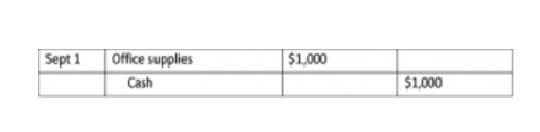
    We will continue this discussion later, but for now take note that a credit entry is required to increase owner’s equity or stockholders’ equity. Double-entry means an accounting system in which every transaction is recorded with retained earnings normal balance amounts entered in two or more accounts. Further, the amounts entered as debits must be equal to the amounts entered as credits. If this is done for every transaction and without errors, then all the amounts appearing in the accounts will have the total amount of debits equal to the total amount of credits.